
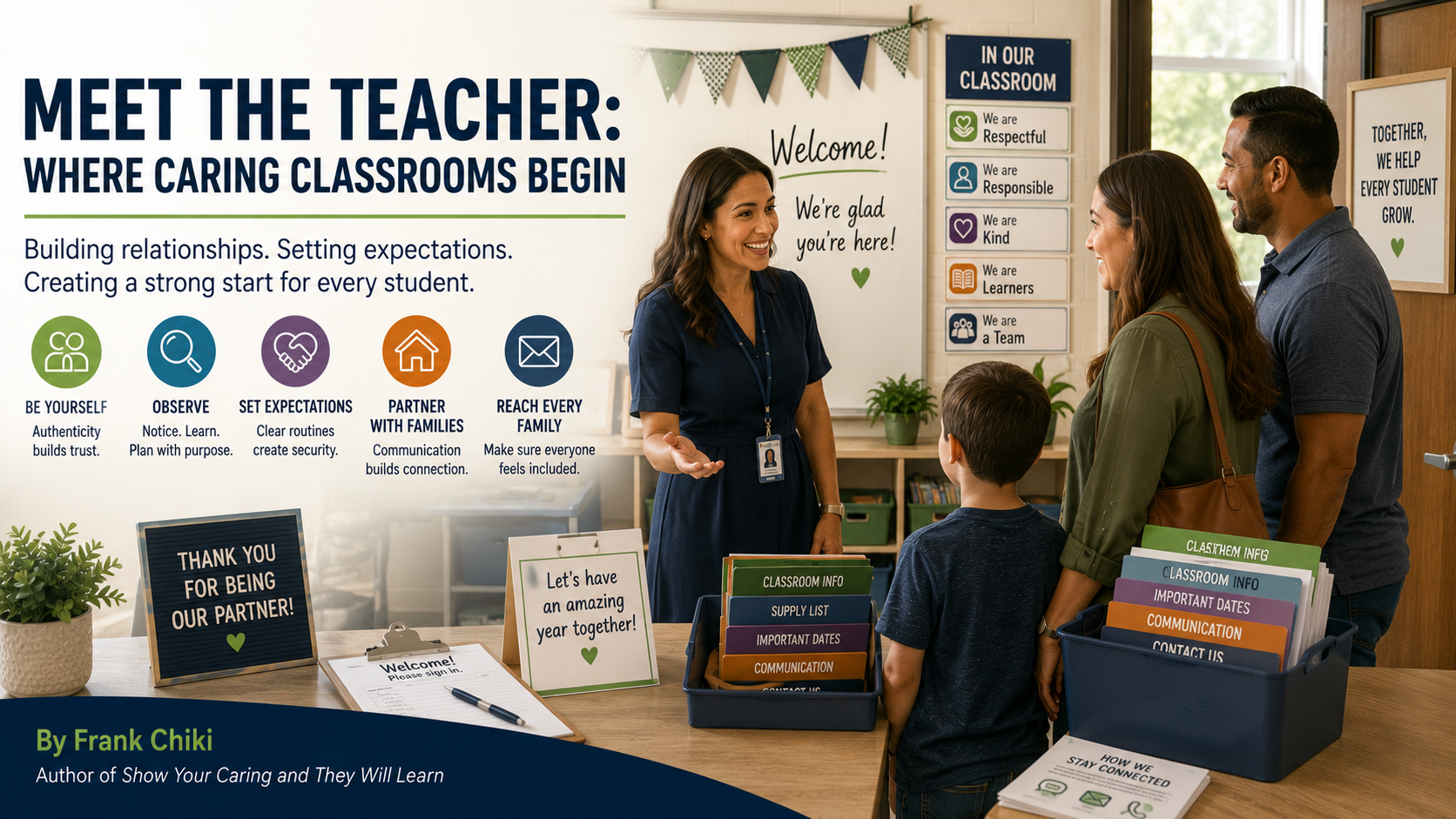
Long before students take their seats for the first lesson…
Long before attendance is taken…
Long before the first assignment is handed out…
Our classrooms have already begun teaching.
The way the room is arranged. The smile at the door. The conversations we have with families. The expectations we communicate. The routines students begin to notice. Every one of these sends a message before we ever begin teaching a standard.
For many schools, Meet the Teacher is viewed as a logistical event—a time to hand out forms, collect supplies, answer questions, and help students find their desks.
Those things certainly matter.
But I believe Meet the Teacher is something much bigger.
Meet the Teacher isn’t an event. It’s the beginning of a relationship.
It is the first opportunity to show students and families what kind of classroom community they are joining. It is where trust begins, expectations are introduced, and students start answering an important question they may never ask aloud:
“Will I belong here?”
The answer should be evident before the first day of school ever begins.
As you prepare for Meet the Teacher this year, here are five ways to ensure your first impression becomes the foundation for a caring classroom.
1. Be Authentically You
Students are remarkably perceptive.
Whether they are five years old or fifteen, they quickly recognize authenticity.
If you’re naturally energetic, let your enthusiasm shine.
If you’re calm and steady, embrace that.
If you’re humorous, laugh with your students.
If you’re more structured and direct, don’t feel pressured to become someone you’re not.
Families aren’t looking for perfection.
They’re looking for someone they can trust with one of the most important people in their lives.
Authenticity builds trust far more effectively than trying to fit someone else’s image of the “perfect teacher.” As your original Meet the Teacher guidance reminds us, students and families respect educators who are genuine from the very beginning.
2. Observe More Than You Talk
Meet the Teacher is often filled with conversation.
But it is also one of the best opportunities you’ll have all year to quietly observe.
Notice who arrives with the student.
Notice friendships already forming.
Observe how students interact with adults and peers.
Pay attention to students who appear anxious, excited, reserved, or eager to help.
These small observations become valuable pieces of information that help us understand our students long before formal assessments begin. They often influence classroom grouping, relationship building, and even the supports students may need during those important first weeks of school.
Sometimes the most meaningful learning on Meet the Teacher night is what we learn about our students.
3. Let Your Classroom Teach Before You Do
Before you speak a single word, your classroom has already begun communicating.
Does it feel organized?
Welcoming?
Predictable?
Purposeful?
Students notice where supplies are located.
Families notice whether information is easy to find.
Everyone notices whether the room feels calm and inviting.
Meet the Teacher is the perfect opportunity to introduce simple routines, explain how materials will be organized, share classroom expectations, and help families understand how the classroom will operate. Structure doesn’t limit students—it creates the security that allows them to thrive.
4. Help Families Become Partners
Families arrive with questions.
Some ask them aloud.
Others carry them quietly.
Will my child be successful?
Will they be safe?
Will they be understood?
Meet the Teacher provides an opportunity to answer those questions before they are even asked.
Provide important information in clear, organized ways.
Explain how families can communicate with you.
Share routines they can reinforce at home.
Offer practical resources instead of overwhelming packets of paperwork.
Most importantly, let families know they are valued partners in their child’s education.
When families feel welcomed, students feel supported.
And caring classrooms extend well beyond the classroom walls.
5. Plan for the Families You Don’t Meet
Perhaps the most caring thing we can do is prepare for the families who never make it through our classroom door.
Every year, some families are unable to attend Meet the Teacher.
Their absence does not reflect a lack of caring.
They may be working multiple jobs.
Caring for younger children.
Managing transportation challenges.
Or facing circumstances we may never know.
Instead of viewing these families as “missing,” view them as deserving another opportunity.
Post important documents online.
Share information through email, classroom communication platforms, and printed materials.
Record a short welcome video.
Reach out personally when possible.
A caring classroom ensures that every family begins the year with the same information and the same invitation to belong—even if they couldn’t attend the event. Your original document emphasizes that providing information through multiple methods is one of the most practical demonstrations of caring we can offer families.
As educators, we often think the first day of school is when classroom culture begins.
In reality, it begins much sooner.
It begins with every interaction.
Every smile.
Every conversation.
Every thoughtfully organized space.
Every expectation explained with kindness.
Every opportunity we create for students and families to feel welcomed.
As I wrote in Show Your Caring and They Will Learn, caring isn’t reserved for difficult conversations or special moments. Caring is found in the intentional decisions we make every day. Meet the Teacher is simply one of the first opportunities we have to demonstrate that philosophy.
When families leave your classroom, they may not remember every handout you distributed.
They probably won’t remember every procedure you explained.
But they will remember how you made them feel.
And students will remember whether they walked out believing:
“This is a classroom where I belong.”
As you prepare for Meet the Teacher this year, remember that you’re not simply organizing supplies or introducing yourself.
You’re beginning a relationship that has the potential to shape an entire school year.
How will your classroom make students and families feel before the first lesson is ever taught? And what intentional step can you take today to ensure every family leaves believing they have found a place where their child is known, valued, and cared for?
Leave a Reply